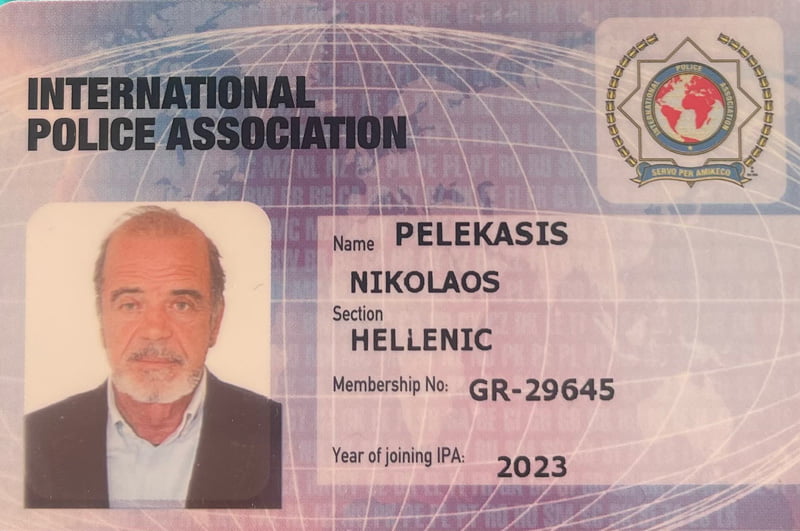

Road Accidents can require an independent investigation when there are unanswered questions regarding how a collision occurred, who was involved or what evidence may be available. At Nikos Pelekasis & Associates, we provide professional road accident investigation services in Athens, Piraeus and throughout Greece for individuals, families, lawyers and other parties with a legitimate interest in establishing the circumstances of an accident.
With more than 30 years of experience in private investigations, our agency can assist with the identification and collection of relevant information, witness tracing, CCTV research, photographic and video evidence, timeline reconstruction and other investigative work related to traffic accidents.
A private investigator does not replace the Hellenic Police, judicial authorities, insurance experts or qualified accident-reconstruction specialists. Our role is to conduct lawful supplementary investigation and help identify, verify and document information that may be relevant to the case.
Traffic accidents can range from relatively minor collisions to serious incidents involving significant injuries or fatalities.
In straightforward cases, the circumstances may be clear.
In others, conflicting accounts, unidentified vehicles, missing witnesses or insufficient evidence can make it difficult to determine exactly what happened.
Our investigation may assist in cases involving:
Every investigation begins with an assessment of the information and evidence already available.
An independent investigation can be useful when important questions remain unanswered after an accident.
Depending on the circumstances, these questions may include:
Our objective is to investigate specific factual questions rather than begin from the assumption that one particular version of events is correct.
The location where a traffic accident occurred can provide important investigative information.
Where appropriate, an examination of the area may identify factors such as:
The condition of the scene can change quickly after an accident.
Vehicles are removed, road debris is cleared and temporary evidence may disappear.
For this reason, early investigation can sometimes be particularly valuable.
CCTV footage can be one of the most important sources of independent evidence following a traffic accident.
The accident itself does not necessarily need to have been captured directly.
Nearby cameras may have recorded:
Potential sources may include lawfully accessible footage from businesses, residential buildings, parking facilities or other security systems.
The availability of CCTV footage can be time-sensitive because many systems automatically overwrite older recordings.
For this reason, identifying potential cameras as early as possible may be important.
Where video material has been lawfully obtained and provided for examination, it can be reviewed in detail.
Depending on the quality of the recording, analysis may help identify:
Video enhancement cannot create information that was never captured by the camera.
Low resolution, poor lighting, distance, motion blur or an obstructed view can significantly limit what can reliably be established.
A hit-and-run accident can leave the victim with very little information about the vehicle or driver responsible.
Even when the registration number is unknown, other details may provide useful investigative leads.
These can include:
An investigation may involve examining the surrounding area, identifying potential cameras, locating witnesses and comparing available information.
No responsible investigator can guarantee that an unidentified vehicle or driver will be located, but early investigation can improve the availability of potential evidence.
When a hit-and-run case also requires the identification or location of an individual connected with the vehicle, additional person tracing investigation may be necessary.
Sometimes a witness or camera records only limited information about a vehicle.
Even partial information can potentially assist an investigation.
Relevant characteristics may include:
Information from different sources can be compared to narrow down potential vehicles.
A positive identification should only be made where the available evidence genuinely supports it.
Independent witnesses can be extremely important in disputed Road Accidents.
However, witnesses do not always remain at the scene or provide their contact details.
An investigation may attempt to identify individuals who were present at or near the location at the relevant time.
Potential witnesses can include:
Where a potential witness is identified, any cooperation is voluntary.
Private investigators do not have police powers and cannot compel an individual to provide a statement.
Where appropriate, voluntary witness information may help clarify the sequence of events.
Useful questions may concern:
Witness recollections should be treated carefully.
Human memory is not perfect, particularly after stressful or rapidly occurring events. Witness information should therefore be compared with other available evidence whenever possible.
Photographs taken after a road accident may contain useful information.
Depending on the circumstances, relevant details can include:
Where original digital photographs are available, metadata may sometimes provide additional information such as creation time, although metadata should always be interpreted carefully and can be modified or absent.
Dashcams and smartphones can sometimes provide valuable evidence.
A recording may capture the collision itself or events immediately before or after it.
Where such material is lawfully available, examination may help establish:
Original files should preferably be preserved rather than repeatedly edited, compressed or re-exported.
Some road accident cases involve electronic evidence that requires technical examination.
Where lawful authority exists to examine a device or data, Digital Forensics may assist with the preservation and analysis of relevant information.
Depending on the circumstances, this can include:
Digital forensic examination should have a clearly defined purpose and does not provide unrestricted access to another person’s private device or communications.
Creating an accurate timeline can be particularly useful when different accounts of an accident conflict.
Information from several sources may be compared, including:
A timeline can help establish what occurred before, during and after the collision and identify inconsistencies requiring further investigation.
Technical reconstruction of a traffic accident is a specialised discipline.
Questions involving vehicle speed, collision dynamics, braking distances, impact forces, vehicle deformation or other engineering matters may require a qualified accident reconstruction specialist or engineer.
Where necessary, our investigative work can be coordinated with appropriate technical experts.
The private investigator’s role may involve locating evidence, witnesses, video footage and other relevant information, while technical conclusions should be made by professionals qualified in the appropriate scientific or engineering discipline.
Accidents involving serious injuries can result in significant legal, financial and personal consequences.
In these cases, establishing the circumstances accurately can become particularly important.
An independent investigation may focus on:
Where legal proceedings are anticipated, early coordination with the client’s lawyer can help determine which factual questions require investigation.
Fatal traffic accidents require particular sensitivity.
Families may seek additional information when questions remain regarding the circumstances of the collision.
Private investigative work can potentially assist by identifying witnesses, locating available video material, reviewing timelines and investigating other factual circumstances.
However, official determinations regarding the cause of death and criminal responsibility remain matters for the appropriate medical, police, prosecutorial and judicial authorities.
Our role is limited to lawful supplementary investigation.
Motorcyclists are particularly vulnerable in road accidents.
In some cases, determining the circumstances may require examining interactions between the motorcycle and other vehicles before the collision.
Potential investigative questions can involve:
Where specialist technical reconstruction is required, the available evidence can be provided to an appropriately qualified expert.
Accidents involving pedestrians can also raise difficult factual questions.
Relevant issues may include:
An independent investigation can help identify and document available information, while technical and legal conclusions remain matters for the appropriate specialists and authorities.
Accidents involving taxis, trucks, delivery vehicles, buses or other commercial vehicles may involve additional sources of information.
Depending on the circumstances and lawful availability, relevant evidence may include:
The investigative approach depends on the vehicles and organisations involved.
Effective Collection of Evidence is often one of the most important aspects of an independent road accident investigation.
Depending on the case, relevant material may include:
The objective is not simply to accumulate information but to identify, verify and document evidence relevant to the questions being investigated.
Certain evidence can disappear quickly following an accident.
CCTV systems may overwrite recordings, witnesses may become difficult to locate and the physical scene may change.
Digital evidence can also be altered through editing, compression or deletion.
Where possible, original material should be preserved.
If legal proceedings are likely, the client’s lawyer can advise regarding formal preservation requests or other legal measures that may be necessary.
Depending on the assignment, findings may be organised into a written investigation report.
A report may contain:
The report should distinguish between verified facts, witness information, investigative observations and matters requiring expert interpretation.
Where photographic, video and digital material needs to be formally documented, our Collection of Evidence service may also form part of the investigation.
Road accident investigations frequently relate to:
For this reason, cooperation with the client’s lawyer can be particularly useful.
A lawyer can identify the factual and legal issues most relevant to the case, allowing the investigation to focus on evidence that may assist the proceedings.
Where technical reconstruction is required, the lawyer and investigator may also coordinate with an appropriately qualified technical expert.
Road accident cases may also involve insurance companies, loss adjusters, engineers and other specialists.
Each professional has a different role.
Our role as private investigators is primarily to investigate facts, locate information and witnesses and document relevant evidence.
We do not replace engineering, medical or insurance assessments.
Private investigators operate within the applicable legal framework.
An investigation does not permit unrestricted access to:
We do not use unlawful methods to obtain information.
Where particular evidence requires formal legal authority, the appropriate process must be followed through the competent authorities or the client’s legal representatives.
Serious road accidents and traffic offences should also be reported to the appropriate authorities, including the Hellenic Police.
Road accident investigations may involve sensitive personal, medical, insurance and legal information.
Information concerning the client, investigation and findings is handled confidentially.
Where necessary, communication arrangements can be established with the client or lawyer before investigative work begins.
Nikos Pelekasis & Associates has more than three decades of experience in private and professional investigations.
Road accident cases can require rapid evidence identification, witness tracing and careful comparison of information from multiple sources.
Depending on the circumstances, field investigation can be combined with CCTV research, Digital Forensics, open-source research and evidence analysis.
Our objective is to establish relevant facts rather than support a predetermined version of events.
Information is evaluated objectively and compared with other available evidence.
Where necessary, our investigative findings can support the work of lawyers, engineers and other appropriately qualified specialists.
Our agency can undertake investigations in Athens, Piraeus, Attica and throughout Greece, depending on the circumstances of each case.
Yes. A private investigator can conduct lawful supplementary investigation, including witness tracing, CCTV research and evidence collection. This does not replace the official role of the police or judicial authorities.
Potentially. An investigation can identify cameras near the location and determine whether relevant footage may exist. Access to footage depends on the circumstances and lawful authority.
Yes. Depending on the available information, investigation may involve CCTV research, witness tracing, vehicle identification and examination of other relevant evidence.
Sometimes. This depends heavily on image quality, lighting, distance and the characteristics visible in the recording. Identification cannot be guaranteed.
Potentially. Field investigation and other lawful research methods may assist in identifying individuals who were present. Any cooperation by a witness is voluntary.
Reliable technical speed calculations generally require appropriate evidence and specialist accident-reconstruction expertise. Where necessary, the available evidence can be evaluated by a qualified technical expert.
Yes, lawful supplementary investigation may assist families or lawyers by identifying witnesses, CCTV and other relevant information. Official criminal and forensic determinations remain the responsibility of the competent authorities.
Potentially. The admissibility and usefulness of evidence depend on how it was obtained and the proceedings involved. When court use is anticipated, cooperation with the client’s lawyer is recommended.
Yes. Depending on the circumstances, our agency can undertake road accident investigations throughout Greece.
If you have been involved in a traffic accident or require independent investigation on behalf of a family member, client or legal case, contact Nikos Pelekasis & Associates for a confidential initial assessment.
Provide us with the information and evidence already available, including the location and date of the accident, photographs, videos, witness information and any other relevant material.
Our Road Accidents investigation services are available to individuals, families, lawyers and other legitimately interested parties in Athens, Piraeus and throughout Greece.
Our objective is to identify and document relevant evidence, locate potential witnesses and establish facts through lawful, discreet and professional investigative methods.
Nikos Pelekasis & Associates – Road Accidents & Private Accident Investigations in Greece
Athens | Piraeus | Nationwide Investigations
Athens Office:
39 Stadiou Street, Athens, 10559
Piraeus Office:
36 Iroon Polytechniou Street, entrance from 8 Dragatsi Street, Piraeus Attica, 185310