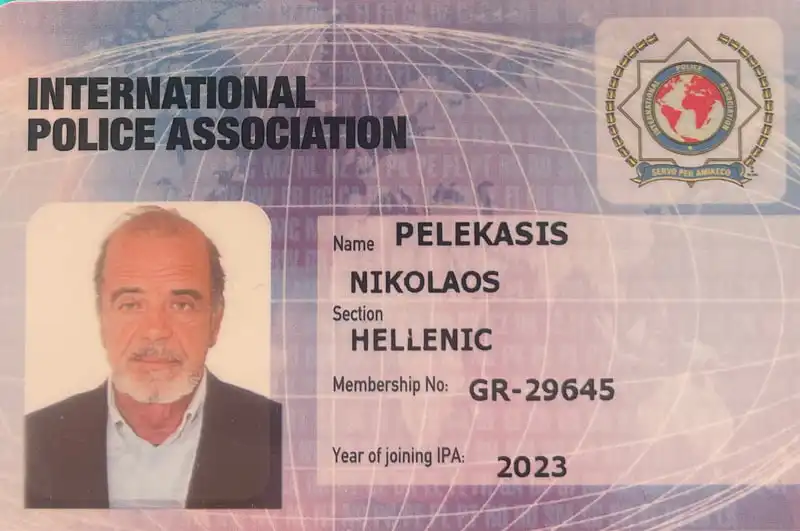

Detective Murders investigations involve some of the most complex and sensitive work undertaken by private investigators. At Nikos Pelekasis & Associates, we provide independent investigative support in homicide, suspicious death and serious criminal cases in Athens, Piraeus and throughout Greece.
With more than 30 years of experience in private investigations, our agency can assist families, lawyers and other legitimately interested parties by reviewing available evidence, identifying potential investigative leads and conducting lawful supplementary investigation.
A private investigator does not replace the Hellenic Police, prosecutors, forensic authorities or the courts in a homicide investigation. Criminal investigation and prosecution remain the responsibility of the competent authorities.
Our role is different: to independently examine information and evidence available to the client, investigate legitimate unanswered questions and provide additional investigative support where appropriate.
A homicide investigation can involve a large amount of information from many different sources.
Witness statements, photographs, CCTV footage, digital devices, timelines, telephone information lawfully available to the client, forensic findings and other evidence may all need to be considered together.
In some cases, families contact a private investigator because they believe important questions remain unanswered.
In others, a lawyer may require additional investigation concerning a specific factual issue relevant to an ongoing or completed case.
Our work may include:
The methodology is determined individually according to the circumstances of each case.
One of the most valuable roles of a private investigator in a serious criminal case can be providing an independent review of the information already available.
A fresh examination does not mean that the original investigation was necessarily incorrect or incomplete.
However, complex cases can contain hundreds or thousands of individual pieces of information. Reviewing them from a different investigative perspective may identify details requiring further examination.
Depending on the material lawfully available, an independent review may consider:
The objective is to identify factual questions that can legitimately be investigated further.
Not every case begins with a confirmed homicide.
A family may have concerns regarding the circumstances surrounding a death and seek an independent examination of available information.
Questions may involve:
A private investigator cannot independently determine the official cause or manner of death.
Medical and forensic conclusions must be made by the appropriately qualified medical, forensic and judicial authorities.
However, an investigator may examine surrounding circumstances and identify information that could be relevant to the client’s lawyer or competent authorities.
Cases that remain unresolved for years can present particular difficulties.
Memories fade, individuals relocate, physical locations change and some records may become more difficult to obtain.
At the same time, new information or technological developments can sometimes justify reviewing older material.
A private cold case investigation may involve:
No responsible investigator can guarantee that an unresolved homicide will be solved.
The purpose of a cold-case review is to determine whether new, overlooked or previously unavailable investigative leads can legitimately be developed.
Witnesses can be extremely important in serious criminal investigations.
Over time, however, witnesses may move, change telephone numbers or become difficult to locate.
Professional tracing methods may assist in identifying or locating individuals who may have information relevant to the investigation.
Depending on the circumstances, useful starting information may include:
Any contact with potential witnesses must be handled carefully.
A private investigator does not have police powers and cannot compel a person to provide information or a statement.
Where appropriate and lawful, interviews or voluntary conversations may help clarify facts or identify new investigative leads.
The objective is to obtain information without influencing or pressuring the individual.
Particular care is necessary where the person may already have provided an official statement to the authorities.
Private investigative activity should never interfere with an active police or judicial investigation.
If significant new information concerning a serious crime is identified, the appropriate course of action may involve the client’s lawyer and the competent authorities.
Video footage can provide important information in homicide and suspicious-death investigations.
Depending on the material lawfully available, analysis may help establish:
Where recordings from several cameras exist, creating a chronological sequence can help reconstruct relevant movements.
The usefulness of CCTV evidence depends heavily on image quality, camera position, timestamps and preservation of the original recordings.
Photographs can also contain details that were not immediately considered significant.
Depending on the circumstances, examination may focus on:
Photographic material should be evaluated together with other available evidence rather than interpreted in isolation.
Modern serious criminal investigations frequently involve digital evidence.
Smartphones, computers, storage devices and other electronic systems may contain information relevant to establishing events, communications or timelines.
Where lawful authority exists to examine a device or data, Digital Forensics may assist in identifying and documenting relevant electronic evidence.
Depending on the circumstances, forensic examination may involve:
Recovery of deleted information cannot be guaranteed. Modern encryption and subsequent use of a device can significantly affect what remains technically recoverable.
Preservation is particularly important in serious investigations.
Continued use of a smartphone or computer can modify data. Installing applications, deleting files, performing updates or resetting a device may alter potentially relevant evidence.
If a device may contain important information, unnecessary changes should generally be avoided until an appropriate forensic strategy has been considered.
Where technically appropriate, forensic methodology aims to preserve original information and document the examination process.
Where a smartphone may also have been compromised or subjected to unauthorized surveillance, a separate Mobile Spyware Detection examination may be appropriate.
Mobile phones can contain significant information relevant to reconstructing events.
However, a private investigator does not have unrestricted access to another person’s:
Access depends on lawful authority, ownership, consent and the circumstances of the case.
Information held exclusively by telecommunications companies or online platforms may require formal requests by the competent authorities or appropriate judicial procedures.
We do not provide unauthorised access to private communications or accounts.
Open-Source Intelligence (OSINT) can sometimes provide additional context to a serious criminal investigation.
Lawfully accessible sources may include:
OSINT research requires careful verification.
Online information may be inaccurate, outdated, deliberately misleading or associated with the wrong individual.
For this reason, information should be cross-checked before being treated as relevant to an investigation.
Social media can provide information concerning relationships, activities, locations or connections between individuals.
Depending on privacy settings and lawful accessibility, publicly available material may assist in developing investigative leads.
Research may examine:
Private investigators cannot compel social-media platforms to disclose private account information.
Such records generally require the appropriate legal or judicial process.
Establishing an accurate timeline is often fundamental in a homicide or suspicious-death investigation.
Information from different sources may need to be compared to determine what happened before, during and after a critical event.
A timeline may combine information from:
Even relatively small differences in timing can sometimes reveal inconsistencies requiring further investigation.
Understanding where relevant individuals were at particular times can be important.
This may involve comparing lawfully available information from multiple sources, such as CCTV footage, witness observations, documented movements and other evidence.
A private investigator does not have unrestricted access to live mobile-phone location information or telecommunications location records.
Where protected location information is required, access must occur through the appropriate lawful process.
A serious investigation may involve a considerable amount of material.
Our Collection of Evidence methodology focuses not simply on accumulating information, but on identifying, evaluating and documenting material that is genuinely relevant to the investigative objective.
Depending on the case, this may involve:
Information is evaluated in context and compared with other available evidence before conclusions are drawn.
DNA and other biological evidence can play a major role in criminal investigations.
However, DNA analysis is a specialised scientific discipline and should be performed by appropriately qualified forensic laboratories and experts.
Where biological material is relevant to a privately instructed investigation, the circumstances of its origin, lawful possession, preservation and chain of custody must be carefully considered.
Our role may involve coordinating investigative information with appropriate specialist professionals where necessary.
We do not present private investigative assessment as a substitute for official forensic laboratory analysis.
Some cases require expertise beyond the scope of a private investigator.
Depending on the circumstances, appropriate specialists may include:
A multidisciplinary approach can be valuable when the investigation involves complex scientific, technical or legal questions.
Each specialist should remain within their professional field of expertise.
Lawyers frequently play an important role when a private homicide investigation is undertaken.
They can help define the legal objective, determine what information may be relevant to proceedings and advise the client regarding how new findings should be handled.
Where appropriate, our investigative work can be coordinated with the client’s legal representatives.
This is particularly important when:
A private investigation must never obstruct or interfere with an official criminal investigation. Serious criminal offences and information concerning potential criminal activity should be reported to the appropriate authorities, including the Hellenic Police.
Where significant information concerning a homicide or other serious crime is identified, the appropriate authorities may need to be informed.
Depending on the circumstances, this can be handled in coordination with the client’s lawyer.
Private investigators do not possess the investigative powers of police or prosecutors.
We cannot issue warrants, compel testimony, demand protected telecommunications data or perform other actions reserved for public authorities.
Depending on the assignment, findings can be organised into a professional written investigation report.
The report may contain:
The report should distinguish clearly between verified information, investigative observations and conclusions or hypotheses.
Private investigators operate within the law and do not possess police powers.
A private homicide investigation does not permit:
Investigative methods are assessed according to the circumstances and applicable legal framework.
The seriousness of an allegation does not remove legal restrictions on how evidence can be obtained.
Homicide and suspicious-death cases frequently involve extremely sensitive information.
Confidentiality is therefore essential.
Information concerning the client, investigation, witnesses and findings is handled discreetly.
Communication arrangements can be established before the investigation begins, particularly where the case involves ongoing legal proceedings or significant media attention.
Some homicide cases receive extensive coverage in newspapers, television and online media.
Media reports can provide useful background information, but they should not automatically be treated as established fact.
Published information may be incomplete, based on early reports or contain speculation.
Our investigative approach distinguishes between:
Maintaining this distinction is particularly important in high-profile cases.
Nikos Pelekasis & Associates has more than three decades of experience in private and professional investigations.
Complex cases require patience, careful evaluation and the ability to compare information from many different sources.
Our role is to examine the available facts objectively.
We do not begin from the assumption that a particular theory is correct simply because it has been suggested by the client or another party.
Where appropriate, traditional investigative techniques can be combined with Digital Forensics, OSINT, evidence analysis and specialist technical expertise.
Relevant findings can be organised and documented clearly, particularly where the investigation is being conducted in cooperation with a lawyer.
Serious criminal investigations require a high level of discretion.
Information concerning the client, case and investigative findings is handled confidentially.
Our agency can undertake investigative work in Athens, Piraeus, Attica and throughout Greece, depending on the circumstances and requirements of the case.
A private investigator may conduct lawful supplementary investigative work for a client with a legitimate interest, but cannot replace or interfere with the official investigation conducted by the police, prosecutors and judicial authorities.
Potentially, yes. A cold-case review may examine available evidence, timelines, witnesses, digital information and new investigative leads. However, no investigator can guarantee that an unresolved homicide will be solved.
Yes, depending on the circumstances. Private investigative work can examine surrounding events and available evidence, but official medical and forensic determinations remain the responsibility of qualified experts and competent authorities.
Depending on the information available, professional tracing methods may assist in locating individuals who could have relevant information. Any cooperation by a witness is voluntary.
Yes, where lawful authority exists to examine the device or data. Digital forensic examination may identify and document relevant electronic evidence.
We do not provide unauthorised access to private communications or protected telecommunications records. Information requiring judicial authority must be obtained through the appropriate legal process.
Yes, where the footage has been lawfully obtained and provided for examination. Video analysis can assist with timelines, movements, vehicles and other relevant details.
Potentially. Where significant new information is identified, the appropriate way to provide it to the competent authorities should be considered, often in cooperation with the client’s lawyer.
Yes. Depending on the circumstances, investigative work can be undertaken in Athens, Piraeus and throughout Greece.
If you require an independent investigation concerning a homicide, suspicious death or unresolved serious criminal case in Greece, contact Nikos Pelekasis & Associates for a confidential initial assessment.
Before accepting an assignment, we evaluate the circumstances, the client’s legitimate interest, the material already available and whether meaningful lawful investigative work can be undertaken.
Our Detective Murders investigation services can assist families, lawyers and other legitimately interested parties requiring independent investigative support in Greece.
Our objective is to examine relevant facts professionally, identify legitimate investigative leads and document findings while maintaining confidentiality, objectivity and full respect for the responsibilities of the competent authorities.
Nikos Pelekasis & Associates – Detective Murders & Private Homicide Investigations in Greece
Athens | Piraeus | Nationwide Investigations
Athens Office:
39 Stadiou Street, Athens, 10559
Piraeus Office:
36 Iroon Polytechniou Street, entrance from 8 Dragatsi Street, Piraeus Attica, 185310