

About This Publication – The Value of Information
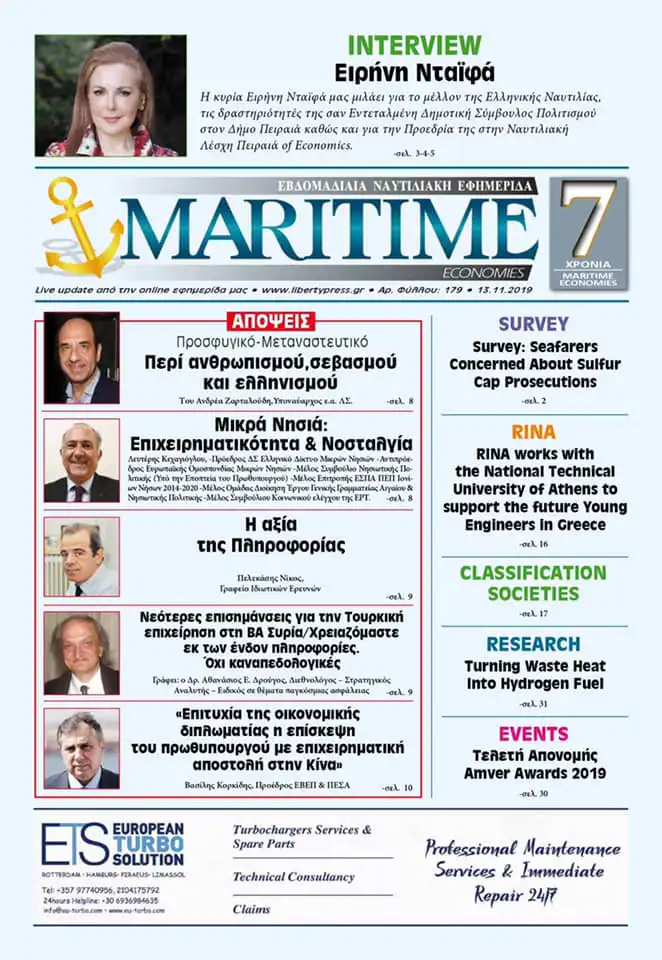
This article was originally published in Greek in Maritime Economies.
This English version reflects the central arguments of the original publication while updating certain references to better reflect the contemporary environment of corporate investigations, information security and business intelligence.
Some investigative practices and methods that may have been discussed or used in earlier periods can now be subject to different legal restrictions. Current investigative services must comply with the applicable legal framework concerning privacy, personal data, cybersecurity and communications confidentiality.
In modern business, increasing importance is placed on recruiting highly capable executives and investing in their professional training. One reason for this shift is that much of today’s business knowledge is now explicit: it consists of practices, methods and expertise that can be taught and acquired through appropriate education and training.
In earlier periods, by contrast, a greater proportion of business knowledge was tacit, consisting of specialised know-how, proprietary methods, patents and inventions that were not widely known.
Similarly, the sources from which a company obtains information may be open, meaning publicly accessible, or closed, meaning that the information is not readily available to the public.
The growing emphasis on explicit knowledge does not necessarily mean that tacit knowledge and non-public information have become less important. In fact, the opposite may be true. As genuinely exclusive information becomes increasingly scarce, it can become even more significant in determining the future direction and competitiveness of a business.
For this reason, business development may depend to a considerable extent on the effective use of specialised knowledge and information obtained through legitimate non-public sources.
Information Collection and Analysis
When collecting and analysing information, businesses generally focus on two strategic objectives.
The first concerns the protection of their own information.
Companies may establish internal controls designed to limit unnecessary dissemination of sensitive information, carefully determine which employees have access to particular data, protect confidential business information and restrict the strategic information they make publicly available through websites, publications and other channels.
Businesses may also take appropriate legal and organisational measures to protect confidential information, intellectual property, trade secrets and other commercially sensitive material.
Protecting the Flow of Information
The objective of this first strategy is therefore to control and protect the dissemination of valuable business information.
The more commercially significant the information, the greater the potential consequences of its unauthorised disclosure.
Information security is not limited to cybersecurity. It also involves understanding who has access to information, why they have access to it, how it is communicated and how effectively it is protected.
Access to New Information
The second strategy focuses on gaining access to new and relevant information.
This information may concern, for example:
- The previous business activities of a prospective supplier.
- Developments within a particular market.
- The activities and publicly observable strategies of competitors.
- Background information concerning a prospective customer or business partner.
- Potential commercial risks.
- Information relevant to a future investment or business relationship.
The value of such information depends not simply on how much information is collected, but on its relevance, accuracy and reliability.
Information Can Be Valuable — or Misleading
It is equally important to recognise that information can be both extremely useful and potentially damaging.
Businesses and other interested parties may sometimes intentionally introduce misleading or inaccurate information into the wider commercial environment.
If such information is accepted without proper verification and subsequently incorporated into a competitor’s strategic planning, it can lead to poor decisions and potentially serious commercial consequences.
For this reason, the central objective is not merely the collection of information, but also its verification and assessment.
The fundamental question is not simply:
“What information do we have?”
but also:
“How reliable is this information?”
Assessing the Reliability of Information
Information from a single source should not automatically be treated as fact.
Professional information analysis involves examining the origin of the information, its context, its relevance and, where possible, comparing it with information obtained from other independent sources.
Open-source information can be particularly valuable, but the fact that something is publicly available does not necessarily make it accurate.
Likewise, information obtained through specialised research must be evaluated before it can responsibly form part of an important business decision.
The distinction between information and intelligence is therefore important. Raw information acquires greater value when it is properly analysed, verified and placed within the appropriate context.
The Strategic Value of Information
Ultimately, the true value of information can only be fully understood by its final recipient — the individual or organisation that uses it to reassess risks, opportunities or business strategy.
The same piece of information may have little significance to one company while being extremely valuable to another.
Its importance depends on the decision that must be made and the wider circumstances in which that decision takes place.
For this reason, professional private investigators can sometimes play a supporting role in business decision-making by conducting lawful research and gathering information relevant to the specific needs of a company.
Such work may form part of:
- Corporate investigations.
- Background research.
- Due diligence.
- Asset investigations.
- Fraud investigations.
- Verification of information.
- Business intelligence research.
- Investigation of potential conflicts or commercial risks.
The objective is not simply to accumulate data, but to provide relevant and properly assessed information that can support informed decision-making.
Private Investigations and Business Intelligence
Modern corporate investigations increasingly combine traditional investigative methods with open-source intelligence, digital research and structured analysis.
At the same time, the collection and processing of information must respect the applicable legal framework concerning privacy, personal data, confidentiality and communications.
Professional investigation therefore requires a balance between the client’s legitimate need for information and the legal limitations governing how that information may be obtained and used.
For businesses, this makes the quality of the investigative process particularly important. Information that has been obtained unlawfully, cannot be verified or has been interpreted incorrectly may ultimately create more problems than it solves.
The value of information therefore lies not only in obtaining it, but in understanding its source, reliability, context and significance.
Nikos Pelekasis & Associates
Private Investigation Agency – Athens & Piraeus, Greece