


About This Publication – Can Facebook be hacked?
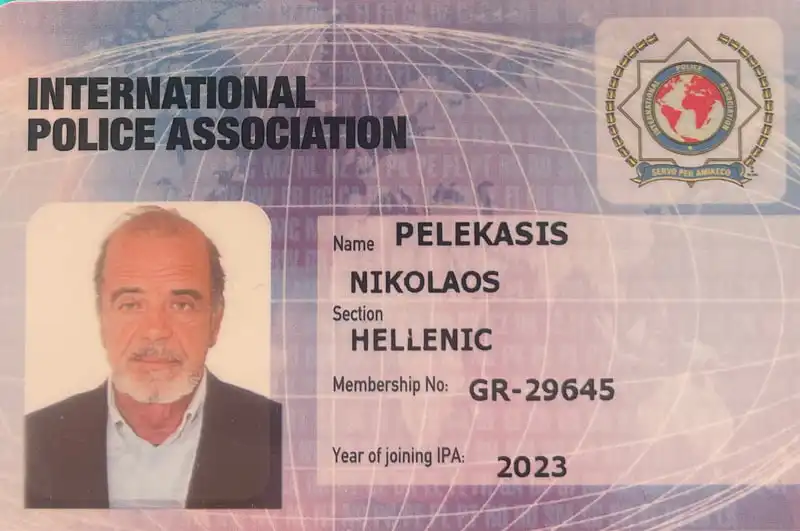
This article was originally published in Greek by My-City.gr, featuring private investigator Nikos Pelekasis on the subject of Facebook account security and unauthorised access to social media accounts.
This English version is a translation of the original publication and reflects the technologies, practices and circumstances discussed at the time the original article was written.
Certain technical methods, software capabilities and investigative practices referred to in the original publication may now be outdated, technically different or no longer applicable. In addition, subsequent changes to the legal framework concerning communications privacy, cybersecurity and personal data protection may affect the legality and applicability of some of the practices described.
The article is therefore presented as an archival publication and should not be interpreted as current technical guidance or instructions for gaining unauthorised access to Facebook or other social media accounts.
Current services provided by Nikos Pelekasis & Associates are conducted in accordance with the applicable legal and regulatory framework.
For current information regarding Facebook account security and compromised accounts, users should refer to the official Facebook Help Center.
Exclusively for My-City.gr, private investigator Nikos Pelekasis answers questions concerning the hacking of Facebook accounts.
It is a fact that the internet has become an integral part of our daily lives and an essential tool for communication.
One of the major issues concerning users today is whether social media accounts can actually be hacked, whether they find themselves on the side of the perpetrator or the victim.
There has been considerable discussion among both aspiring and experienced hackers about the difficulty of compromising social media accounts. A variety of methods have been used over the years, including large-scale brute-force attacks using software such as Hydra, Medusa and similar tools.
Facebook, in an effort to protect its users, has introduced multiple layers of security designed to prevent this type of attack.
Brute-force programs are capable of testing multiple — even hundreds of — passwords every second until the correct one is eventually found.
Most of us have, at some point, entered our password incorrectly more than three or four times. When we eventually log into our account, we may see a notification informing us that someone attempted to access our profile.
If passwords are attempted repeatedly — for example, 40 or 50 times — something that would rarely be done manually, a time delay may also be imposed before another login attempt can be made, much like the security mechanism used for a mobile phone’s lock code.
Can Facebook Be Hacked? The Answer Is Yes.
The most common and easiest way in which a Facebook account can be compromised is through physical access to the victim’s computer.
Even if the victim has deleted their browsing history and cookies from the computer, it may still be possible to recover stored credentials.
In more specialised cases, where the perpetrator does not have physical access to the victim’s computer, the probability of success can reach 80%.
To achieve this, social engineering systems and methods are used which, for obvious reasons, will not be described in this article.
Despite the illegal nature of these methods, they have sometimes been used by parents in relation to their minor children, with the intention of preventing delinquent or dangerous behaviour, including drug use, sexual blackmail and the voluntary disappearance of minors.
In certain cases, approaches by paedophiles have reportedly been prevented. In one recent case, parents became aware of conversations between their minor child and an individual approximately 30 years older, in which the adult was asking the child for intimate photographs and requesting an in-person meeting.
In any case, the law is strict, and unauthorised access to social media accounts constitutes a criminal offence and is punishable by law.